
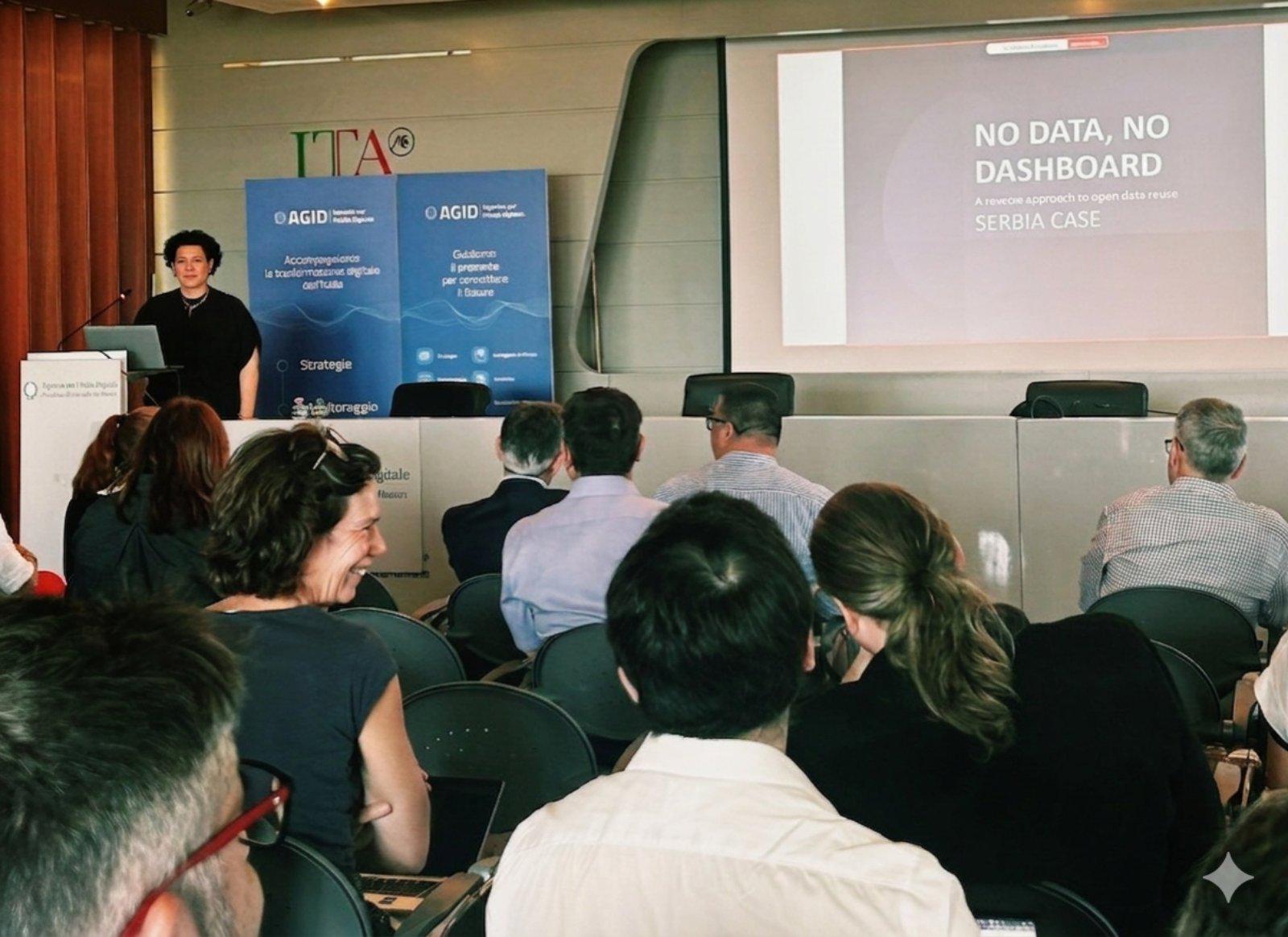
At the European Data Portal’s workshop for data providers, held on 16–17 June 2026 in Rome, Italy, Andreja Gluščević, Coordinator for Data Standardization and Open Data at the Office for IT and eGovernment presented Serbia’s innovative approach to open data reuse titled “No Data, No Dashboard: A Reverse Approach to Driving Open Data Reuse”. The presentation was part of the Community session: Engaging with the reuser community. This highlighted practical ways to strengthen the link between data publication and real-world use.
The Serbian case addresses a persistent challenge in open data ecosystems. Many datasets are published to meet regulatory requirements. Because of this, they often remain underused due to limited visibility, complexity, or lack of direct relevance to user needs. The workshop session emphasized the importance of moving beyond compliance-driven publication toward meaningful engagement with data users.
At the core of Serbia’s approach is a shift in perspective from data-driven to demand-driven publishing. Instead of starting with existing datasets, institutions begin by identifying concrete user needs and real-life problems. This reverse approach ensures that only relevant data is defined, structured, and released. Additionally, the clear objective of enabling its immediate use was pointed out.
The presentation showcased several concrete examples of this approach in practice. These included datasets and dashboards supporting decisions on financing and co-financing programs in the field of sports as well as the register of acts of the Official Gazette of the Municipality of Despotovac with an emphasis on the standardized Power BI theme developed by the Office for IT and eGovernment, reports on domestic violence, and the reuse of allergen pollen data. Each case illustrated how clearly defined user needs can lead to targeted data publication and tangible outcomes.
These use cases demonstrated how a demand-driven model can increase data quality, encourage greater reuse, and create measurable impact. The session reinforced a central message of the workshop: successful open data initiatives depend not only on publishing data, but on ensuring it is actively used, transforming demand into data, and data into impact.